
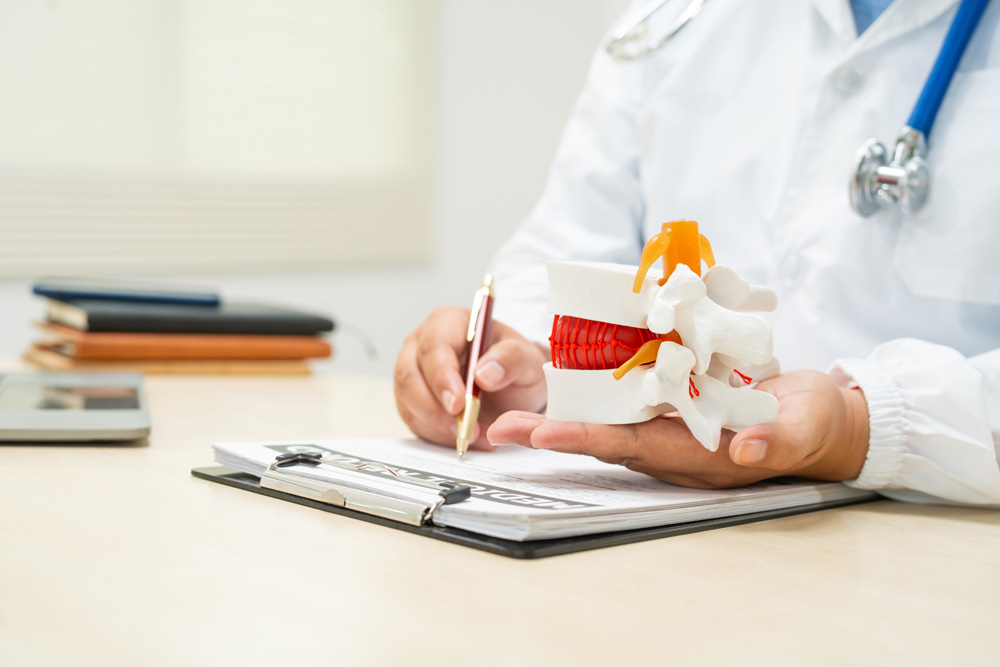
Persistent back or neck pain caused by spinal stenosis, herniated discs, or degenerative spine conditions can severely impact mobility and quality of life. When conservative approaches such as physical therapy or spinal injections fail to provide lasting relief, a laminectomy may be recommended. A laminectomy removes part of the vertebra called the lamina, creating more space in the canal to relieve the pressure on the spinal cord and nerves.
At New York Spine Specialist, our expert spine surgeons specialize in both traditional and minimally invasive laminectomy procedures, helping patients regain function and reduce pain with shorter recovery times and improved outcomes. Understanding when a laminectomy is necessary helps patients make informed decisions about their spine health. This procedure is often recommended for those who have severe nerve compression symptoms, including persistent pain, numbness, weakness, or difficulty walking.
Understanding Laminectomy
This surgical procedure removes part or all of the lamina – the bony arch of the vertebra that covers and protects the spinal canal. By removing this portion of bone, our expert spine surgeons create more space within the canal, easing pressure on the spinal cord or nerve roots.
The following conditions may warrant a laminectomy:
1. Spinal Stenosis
Spinal stenosis – the narrowing of spaces within the spine that can put pressure on nerves—is perhaps the most common reason for laminectomy. This condition typically develops gradually due to age-related changes or arthritis.
When laminectomy is recommended for spinal stenosis:
- When symptoms significantly impact daily activities
- After conservative treatments (physical therapy, medications, injections) have failed
- When imaging confirms significant narrowing of the spinal canal
- When neurological symptoms are progressive or severe
When evaluating surgical options for older individuals, surgeons consider factors such as overall health, surgical risks, potential benefits versus recovery challenges, comorbidities that could impact outcomes, and life expectancy in relation to recovery time. For younger patients, key considerations include the long-term implications of surgery, the ability to return to sports or physically demanding activities, the possibility of future surgeries, and exploring alternative treatments that may help delay the need for surgery.
2. Herniated Discs With Complications
While many herniated discs can be treated without surgery, some cases may require a laminectomy, particularly when:
- The herniation causes severe nerve compression
- Conservative treatments have failed after 6-12 weeks
- There are progressive neurological deficits
- The herniation is accompanied by fragments of disc material in the spinal canal
In cases where a herniated disc does not improve with conservative treatments and leads to severe nerve compression or progressive neurological deficits, a laminectomy may be necessary. This procedure can provide significant relief by removing the portion of the disc that is pressing on the nerves. While surgery is often considered a last resort, it can offer lasting benefits for patients who have not found relief through non-surgical methods.
3. Spinal Injuries and Trauma
Following certain spinal injuries, a laminectomy might be necessary to:
- Take out bone fragments pressing on the spinal cord
- Relieve compression caused by trauma-induced swelling
- Access the spine for stabilization procedures
- Address acute neurological deterioration after injury
In the case of spinal injuries, a laminectomy is an essential step in addressing issues like bone fragments pressing on the spinal cord, trauma-induced swelling, or acute neurological deterioration. This procedure helps relieve pressure on the spine and allows for better access to the spinal area for necessary stabilization treatments. If you’re facing the aftermath of a spinal injury, our team at New York Spine Specialist is here to provide expert care and guide you through your recovery, ensuring the best possible outcome for your health and well-being.
4. Infection
Infections affecting the spine (such as epidural abscesses or osteomyelitis) may require surgical intervention through laminectomy to:
- Drain abscesses
- Remove infected tissue
- Relieve pressure on neural structures
- Allow for proper antibiotic treatment
Understanding the expected recovery process is crucial for patients when making informed decisions. Typically, hospital stays for standard procedures last 1 to 3 days, with a return to light activities within 2 to 4 weeks. Full activity resumption may take 3 to 6 months, and complete neural recovery, if applicable, could take up to 18 months. Success rates show that 70-80% of patients experience significant improvement in leg pain from spinal stenosis, though results for back pain can vary more widely.
Key Clinical Indications: When Surgery Becomes Necessary
While the conditions above may potentially require laminectomy, specific clinical indicators help surgeons determine when the procedure is truly necessary:
Neurological Deficits
Progressive neurological deficits are often a clear indication that surgical intervention may be necessary. These can manifest as increasing weakness in the limbs, worsening numbness, or sensory changes. Abnormal reflexes, which suggest nerve compression, and coordination problems or gait disturbances are additional signs that nerve function is impaired. These symptoms require careful evaluation to determine the underlying cause and whether surgical treatment, such as a laminectomy, may be the most appropriate solution.
Cauda Equina Syndrome
This serious but rare condition requires immediate medical attention. It affects the group of nerve roots at the end of the spinal cord. Symptoms may include bladder or bowel control issues, saddle anesthesia (loss of sensation in areas that would touch a saddle), sexual dysfunction, and severe or progressive leg weakness. Prompt diagnosis and surgical treatment are critical to prevent permanent nerve damage and improve recovery.
Failed Conservative Management
Surgery is usually only considered after conservative treatments have been tried and failed. These treatments typically include physical therapy for 6 to 12 weeks, anti-inflammatory medications, epidural steroid injections, activity modifications, and various pain management techniques. If non-surgical options fail to provide relief, surgical intervention may be needed to address the underlying issue and improve the patient’s quality of life.
Quality of Life Considerations
The impact of a spinal condition on daily functioning is a critical factor in determining whether surgery is the best option. This includes the inability to walk more than short distances, experiencing significant pain despite medication, loss of independence in daily activities, and sleep disruption due to pain or neurological symptoms. When a patient’s quality of life is severely compromised, surgery may offer the best opportunity to restore function and reduce pain.
The Diagnostic Process: Confirming the Need for Laminectomy
Before recommending a laminectomy, healthcare providers conduct a thorough evaluation, including:
- MRI scans to visualize soft tissues, nerves, and areas of compression
- CT scans for detailed bone imaging
- X-rays to assess spinal alignment and stability
- Myelograms in cases where an MRI cannot be performed
- Testing of muscle strength and reflexes
- Sensory assessment
- Evaluation of walking pattern and balance
- Specific tests like the straight leg raise for nerve root tension
- Electromyography to assess nerve and muscle function
- Nerve conduction studies to evaluate nerve transmission
The diagnostic process is essential to confirm the need for a laminectomy and ensure the most effective treatment. Healthcare providers rely on a combination of imaging studies, neurological exams, and electrodiagnostic tests to thoroughly assess the condition.
MRI, CT scans, and X-rays provide detailed insights into the spine’s structure and areas of compression, while a neurological examination helps evaluate muscle strength, reflexes, and sensory function.
Additionally, electromyography and nerve conduction studies help assess nerve and muscle function. At New York Spine Specialist, we utilize these advanced diagnostic tools to accurately determine the best approach to address your spinal condition and improve your overall health.
Contact the Skilled Spine Surgeons at New York Spine Specialist
At New York Spine Specialist, we understand how debilitating spinal conditions can be and are committed to providing effective solutions. If you’ve been struggling with issues like spinal stenosis or herniated discs, a laminectomy might be the key to regaining your quality of life. Our team, led by Dr. Lattuga, rated in the top 1% of doctors in NY/NJ, uses advanced diagnostic tools with minimally invasive techniques. With affiliations at prestigious institutions, including New York Presbyterian Hospital and Northwell, we offer comprehensive care.
If you’re experiencing significant pain, neurological deficits, or other symptoms that impact your daily life, don’t wait. Our multilingual staff provides services in Spanish, Italian, French, Korean, Cantonese, and Mandarin to better serve our diverse community. Call New York Spine Specialist today at (516) 355-0111 or visit our contact form. Our compassionate team is ready to guide you through the process and help you take the first step toward a pain-free future.