
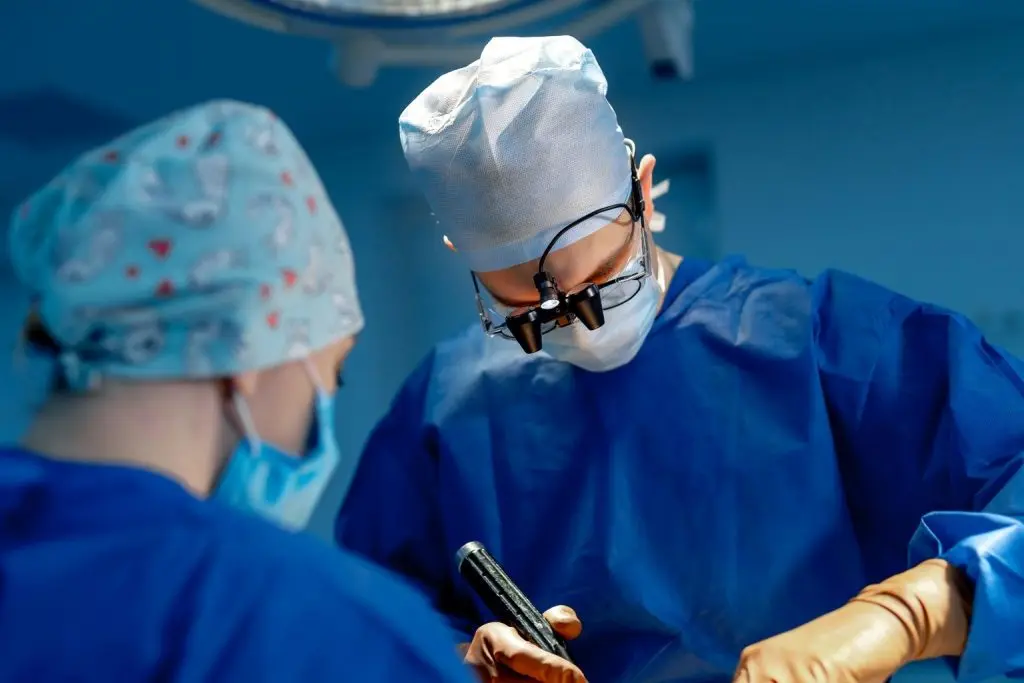
When persistent spine pain threatens to derail your active New York lifestyle, minimally invasive spine surgery offers a pathway to recovery that honors both your need for effective treatment and your desire to return quickly to the demands of city life. These advanced surgical techniques utilize precision technology and smaller incisions to address complex spine conditions while dramatically reducing recovery time and surgical trauma compared to traditional open procedures.
New York Spine Specialist brings world-class minimally invasive spine surgery directly to patients throughout the five boroughs and surrounding areas. Our team understands that New Yorkers need solutions that work as efficiently as they do, which is why we have dedicated ourselves to mastering the most advanced surgical techniques available in spine care today.
Minimally invasive spine surgery represents a fundamental shift in how spine conditions are treated surgically. Rather than the large incisions and extensive muscle cutting required in traditional open surgery, these procedures use incisions typically measuring less than one inch. Surgeons access the spine by working through natural tissue planes or gently separating muscle fibers, preserving the integrity of supporting structures around the spine.
The hallmark of these procedures is the use of specialized instruments designed specifically for working through small spaces. Tubular retractors create a clear pathway to the spine while protecting surrounding tissues, and high-definition cameras provide enhanced visualization that often exceeds what is possible with the naked eye in open surgery.
Modern minimally invasive spine surgery incorporates sophisticated technology that transforms surgical precision. Real-time imaging systems allow surgeons to visualize anatomy and instrument placement continuously throughout the procedure, while computer-assisted navigation provides three-dimensional guidance for optimal accuracy when placing implants or removing diseased tissue.
Intraoperative monitoring systems track nerve function throughout surgery, providing immediate feedback about the effectiveness of decompression procedures. This technology integration allows surgeons to achieve superior outcomes while maintaining the highest safety standards for every patient.
Minimally invasive techniques effectively address the full spectrum of spine conditions commonly seen in our New York practice. Herniated discs, whether in the cervical, thoracic, or lumbar spine, can be treated using microscopic discectomy procedures that precisely remove the offending disc material while preserving healthy disc structure and function. Spinal stenosis responds well to minimally invasive decompression techniques that create adequate space for compressed nerves without extensive bone removal.
Degenerative spine conditions including spondylolisthesis and degenerative disc disease can often be addressed through minimally invasive fusion procedures. Even complex conditions like compression fractures from osteoporosis may be treated with vertebroplasty or kyphoplasty procedures that restore vertebral height and stability through tiny incisions.
The benefits of minimally invasive spine surgery align perfectly with the fast-paced demands of New York living. Significantly reduced post-operative pain means less reliance on prescription pain medications, allowing for clearer thinking and faster return to work responsibilities. Most procedures can be performed on an outpatient basis or with just an overnight hospital stay, minimizing time away from important commitments.
Recovery timelines are dramatically shortened compared to traditional surgery. While open spine surgery may require weeks or months of limited activity, minimally invasive procedures often allow return to desk work within days and full activity within weeks rather than months. This accelerated recovery is particularly valuable for professionals who cannot afford extended time away from their careers.
The advantages of minimally invasive spine surgery extend far beyond smaller incisions. Patients who undergo MISS typically experience a comprehensive improvement in their surgical experience and recovery process.
One of the most significant benefits of minimally invasive spine surgery is the dramatically reduced recovery time. While traditional open spine surgery may require months of recovery, most MISS patients return to light activities within 2-4 weeks and resume normal activities within 6-12 weeks. This accelerated recovery means less time away from work, family, and the activities you enjoy.
The preservation of muscle tissue and reduced surgical trauma allow your body to heal more efficiently. Many patients are able to walk within hours of their procedure and go home the same day or after just one night in the hospital, compared to traditional surgery that often requires several days of hospitalization.
Smaller incisions naturally result in less post-operative pain and minimal scarring. The preservation of muscle tissue means less inflammation and tissue damage, which translates to reduced pain medication requirements and a more comfortable recovery experience. Many patients find they need significantly fewer pain medications compared to traditional surgery patients.
The cosmetic benefits are also substantial. Minimally invasive procedures leave small, barely visible scars that fade significantly over time, rather than the long, prominent scars associated with open surgery.
The minimally invasive approach significantly reduces the risk of surgical complications. Smaller incisions mean lower infection rates, reduced blood loss, and decreased risk of damage to surrounding tissues. The precision afforded by advanced imaging and robotic guidance further minimizes the risk of nerve damage or other complications.
Studies consistently show that minimally invasive spine surgery patients experience fewer complications, shorter hospital stays, and lower rates of surgical site infections compared to those undergoing traditional open procedures.
Beyond immediate recovery benefits, minimally invasive techniques help preserve long-term spinal function by maintaining normal anatomy. The preservation of muscle attachments, ligaments, and bone structures helps maintain spinal stability and may reduce the risk of problems at adjacent spine levels in the future. The reduced tissue trauma inherent in these procedures translates to less post-operative muscle spasms, decreased blood loss, and lower infection rates.
Patients often experience more natural spine mechanics after minimally invasive procedures because the supporting structures remain largely intact. This preservation of normal anatomy contributes to better long-term outcomes and higher patient satisfaction rates compared to traditional open surgical approaches.
Post-operative care emphasizes early movement and gradual return to normal activities. Physical therapy may begin within days of surgery, focusing initially on gentle mobility exercises and progressing to strengthening and conditioning as healing advances. Our team provides detailed recovery guidelines and maintains close communication throughout the healing process to ensure optimal outcomes.
Most patients achieve their surgical goals within weeks to months, depending on the complexity of their procedure and their overall health status. Follow-up appointments monitor progress and adjust activity restrictions based on individual healing patterns, allowing for personalized recovery timelines that respect each patient’s unique circumstances.
Minimally invasive spine surgery is effective for treating a wide range of spinal conditions that cause chronic pain, numbness, weakness, or limited mobility. Our spine team evaluates each patient individually to determine the most appropriate treatment approach.
Herniated discs occur when the soft center of a spinal disc pushes through a crack in the outer ring, potentially pressing on nearby nerves and causing pain, numbness, or weakness. Minimally invasive discectomy allows surgeons to remove the herniated portion of the disc through a small incision, relieving pressure on the affected nerve while preserving as much healthy disc material as possible.
Spinal stenosis involves the narrowing of spaces within the spine, putting pressure on nerves and causing pain, numbness, or weakness in the legs or arms. Minimally invasive decompression procedures can open up these narrowed spaces by removing bone spurs, thickened ligaments, or other tissues causing compression.
As we age, spinal discs naturally lose water content and become less flexible, potentially causing pain and instability. Minimally invasive fusion procedures can stabilize affected segments while preserving motion in adjacent levels, providing pain relief while maintaining spinal function.
Certain types of adult scoliosis and spinal deformities can be effectively treated with minimally invasive correction techniques. These procedures use smaller incisions and specialized instruments to gradually correct spinal alignment while minimizing the surgical impact on surrounding tissues.
Our comprehensive surgical capabilities allow us to offer a full range of minimally invasive spine procedures, each tailored to address specific conditions and patient needs.
Endoscopic discectomy uses a thin, flexible tube with a camera to visualize and remove herniated disc material. This procedure typically takes 45-60 minutes and allows patients to go home the same day. The endoscopic approach provides excellent visualization while requiring only a 7mm incision.
Transforaminal Lumbar Interbody Fusion (TLIF) and Extreme Lateral Interbody Fusion (XLIF) are advanced fusion techniques that stabilize the spine while preserving surrounding anatomy. These procedures use specialized cages and bone graft material to fuse vertebrae together, providing long-term stability for degenerative conditions.
Minimally invasive laminectomy removes portions of the lamina (back part of the vertebra) to create more space for compressed nerves. Foraminotomy enlarges the neural foramen where nerve roots exit the spine. Both procedures can be performed through small incisions with minimal muscle disruption.
These procedures treat compression fractures by injecting bone cement into fractured vertebrae to stabilize them and reduce pain. Kyphoplasty includes an additional step of inflating a balloon to restore vertebral height before cement injection. Both procedures are performed on an outpatient basis.
Understanding the surgical process helps reduce anxiety and allows you to prepare properly for your procedure. Our team will guide you through every step of your surgical journey.
Before your surgery, you’ll undergo comprehensive pre-operative testing to ensure you’re a good candidate for minimally invasive surgery. This may include blood work, cardiac clearance, and updated imaging studies. Our team will provide detailed instructions about medications to avoid, dietary restrictions, and what to expect on the day of surgery.
You’ll meet with your surgeon to review the procedure details, discuss risks and benefits, and address any final questions. Our anesthesiology team will also meet with you to discuss anesthesia options and address any concerns.
On the day of surgery, you’ll arrive at our state-of-the-art surgical facility where our team will prepare you for the procedure. Most minimally invasive spine surgeries are performed under general anesthesia, though some procedures may use regional anesthesia combined with sedation.
Your surgeon will use real-time imaging guidance to precisely locate the affected area and make the small incision. Specialized instruments and cameras guide the procedure, allowing your surgeon to address the spinal condition while preserving surrounding healthy tissue. Depending on the procedure, surgery may take anywhere from 45 minutes to several hours.
Immediately after surgery, you’ll be taken to the recovery area where our nursing staff will monitor your condition as you wake up from anesthesia. Many patients are surprised by how little pain they experience compared to what they expected. You’ll be encouraged to sit up and walk within hours of your procedure, which helps speed recovery and prevent complications.
Most patients go home the same day or after one night in the hospital. You’ll receive detailed discharge instructions, including activity guidelines, medication management, and follow-up appointment scheduling.
New York Spine Specialist stands out as a leader in minimally invasive spine surgery, combining exceptional surgical skill with compassionate patient care and cutting-edge technology.
Our spine surgeons are board-certified and fellowship-trained in advanced spine surgery techniques. Dr. Anthony LaTuga and our surgical team bring decades of combined experience in minimally invasive spine surgery, having performed thousands of successful procedures. Our surgeons regularly participate in continuing education and research to stay at the forefront of surgical innovation.
We maintain affiliations with some of the most recognized hospitals in the New York and New Jersey area, including New York Presbyterian Hospital, Hudson Regional Hospital, Northwell, Bayonne Hospital, Carewell Health Medical Center, and Brooklyn Hospital. These partnerships ensure you have access to the highest quality surgical facilities and support services.
Our commitment to providing the most advanced care means investing in the latest surgical technology. Our operating rooms are equipped with intraoperative CT scanners, advanced fluoroscopy systems, high-definition endoscopic equipment, and robotic guidance systems that enhance surgical precision and safety.
This technology allows our surgeons to perform complex procedures with unprecedented accuracy while minimizing surgical trauma. The result is better outcomes, faster recovery, and reduced complication rates for our patients.
Your relationship with our team doesn’t end when surgery is complete. We provide comprehensive post-operative care that includes regular follow-up appointments, physical therapy coordination, and ongoing support throughout your recovery. Our goal is to ensure you achieve the best possible outcome and return to the activities you love as quickly and safely as possible.
Understanding what to expect during recovery helps you prepare for a successful outcome and return to normal activities.
The recovery timeline for minimally invasive spine surgery varies depending on the specific procedure and individual patient factors, but general milestones include immediate post-operative walking, return to light activities within 2-4 weeks, and full activity resumption within 6-12 weeks.
During the first week, you’ll focus on rest, proper wound care, and gradual increase in activity levels. By the second week, most patients can return to desk work and light household activities. Physical therapy typically begins 2-4 weeks after surgery to help restore strength, flexibility, and function.
Minimally invasive spine surgery has excellent success rates, with most patients experiencing significant improvement in pain, function, and quality of life. Studies show that 85-95% of patients achieve good to excellent outcomes following minimally invasive spine procedures.
Patient satisfaction rates are consistently high, with most patients reporting they would choose minimally invasive surgery again and recommend it to others facing similar conditions. The combination of effective pain relief, faster recovery, and minimal scarring contributes to exceptional patient satisfaction.
Most patients are pleasantly surprised by how quickly they can return to their normal activities. While everyone heals at their own pace, the minimally invasive approach typically allows for a much faster return to work, exercise, and recreational activities compared to traditional surgery.
Your surgeon will provide specific guidelines based on your procedure and recovery progress. Generally, patients can return to sedentary work within 1-2 weeks, physical work within 6-12 weeks, and full recreational activities within 2-3 months.
New York Spine Specialist offers minimally invasive spine surgery at convenient locations throughout New York, making advanced care accessible regardless of where you live or work in the metropolitan area. Our surgeons maintain hospital affiliations with some of the most recognized medical institutions in New York, ensuring access to the highest quality facilities and support services available.
Your path to recovery begins with understanding your options and finding the right surgical approach for your specific needs. New York Spine Specialist combines decades of surgical experience with the most advanced minimally invasive techniques available today. We accept most major insurance plans and work diligently to make advanced spine care accessible to patients throughout New York. Contact our office at (516) 355-0111 or book an appointment to discover how minimally invasive spine surgery can help you reclaim your active New York lifestyle.
Most patients with herniated discs, spinal stenosis, degenerative disc disease, and certain types of scoliosis are candidates for MISS. Your surgeon will evaluate your specific condition, medical history, and imaging studies to determine the best approach.
Recovery varies by procedure and patient, but most people return to light activities within 2-4 weeks and normal activities within 6-12 weeks. This is significantly faster than traditional open surgery recovery.
While MISS has lower risks than open surgery, potential complications include infection, bleeding, nerve damage, or incomplete symptom relief. Your surgeon will discuss specific risks based on your procedure.
We use advanced imaging technologies including intraoperative CT scans, fluoroscopy, endoscopes, robotic guidance systems, and tubular retractors to perform precise procedures through small incisions.
Costs vary based on the specific procedure, insurance coverage, and facility. Many insurance plans cover medically necessary spine surgeries. Our team will help verify your benefits and discuss payment options.