
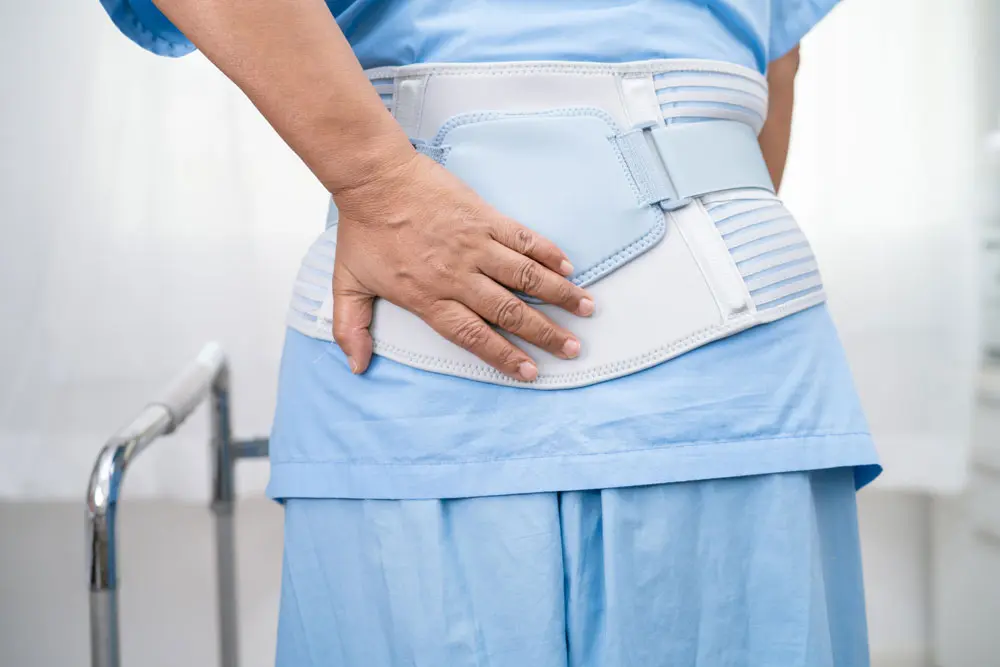
Spinal fractures can occur from traumatic injuries, underlying bone-weakening conditions, or a combination of both. These fractures range from minor cracks requiring minimal intervention to severe breaks demanding immediate surgical treatment, depending on the location, type, and surrounding tissue damage.
We at New York Spine Specialist provide comprehensive care for patients with spinal fractures across NY and NJ. Our team offers expert diagnosis and personalized treatment plans to address your specific fracture type and severity. With Dr. Lattuga, rated in the top 1% of doctors in NY/NJ, we combine clinical excellence with compassionate care to guide you through recovery.
1. Compression Fractures
Compression fractures happen when the front portion of a vertebra collapses while the back portion remains relatively intact, creating a wedge-shaped vertebra. These fractures commonly affect the thoracic spine (mid-back) and the upper lumbar spine (lower back).
Osteoporosis, a condition causing decreased bone density, is a common underlying cause of compression fractures. As bones become more fragile, even minor activities like coughing, sneezing, or bending forward can trigger a fracture. According to the National Osteoporosis Foundation, approximately 700,000 Americans experience osteoporotic vertebral compression fractures annually.
Symptoms of compression fractures vary widely. Some people experience sudden, severe pain, while others notice a dull ache or no pain at all. Height loss, increased kyphosis (forward curvature of the upper back), and a stooped posture often develop as multiple compression fractures occur over time.
Treatment approaches depend on fracture severity and symptom intensity. Conservative measures, including pain management, bracing, and physical therapy, help many patients. For more severe cases, minimally invasive procedures like vertebroplasty or kyphoplasty may stabilize the fracture and provide significant pain relief.
2. Burst Fractures
Burst fractures involve the collapse of an entire vertebral body in multiple directions. Unlike compression fractures, where only the front portion collapses, burst fractures scatter bone fragments in various directions, potentially threatening the spinal cord or nerve roots.
High-energy trauma typically causes these serious fractures. Motor vehicle accidents, falls from significant heights, or sports injuries provide enough force to shatter a vertebra. The thoracolumbar junction proves particularly vulnerable to these injuries.
The symptoms of burst fractures include severe, immediate pain, potential neurological deficits like numbness or weakness in the extremities, and sometimes loss of bowel or bladder control if spinal cord injury occurs. Accurate diagnosis requires comprehensive imaging studies to assess bone damage and any soft tissue involvement.
Treatment for burst fractures almost always requires specialized spine care. Stable fractures without neurological involvement might be managed with bracing and restricted activity. However, unstable fractures or those with neurological deficits typically require surgical intervention to decompress neural structures and stabilize the spine.
3. Chance Fractures
Chance fractures represent horizontal splits through the vertebra, often affecting all three columns of the spine. These unique fractures result from flexion injuries where the spine bends forward excessively around a fixed point.
Seat belt injuries represent a classic cause of Chance fractures. During a sudden stop or collision, the upper body continues moving forward while the lap belt holds the lower body in place, creating a fulcrum around which the spine bends. This mechanism explains why these fractures commonly occur at the thoracolumbar junction.
Pain, tenderness, and bruising across the abdomen or lower back often accompany these fractures. Because of the injury mechanism, patients with Chance fractures may also sustain abdominal injuries requiring evaluation and treatment.
The stability of Chance fractures determines their treatment approach. Stable fractures without significant displacement may heal with bracing and activity modification. Unstable fractures or those with neurological involvement typically require surgical stabilization to prevent progressive deformity and potential nerve damage.
4. Fracture-Dislocations
Fracture-dislocations represent severe spinal injuries combining broken vertebrae with displacement of the spinal column. These catastrophic injuries disrupt all three columns of the spine, creating significant instability and a high risk for neurological damage.
High-energy trauma, such as motor vehicle accidents, significant falls, or crushing injuries, typically causes these complex fractures. The extreme forces involved break bones and also tear the supporting ligaments, allowing vertebrae to shift out of proper alignment.
Patients with fracture dislocations often experience severe pain, obvious deformity, and significant neurological deficits. Complete or incomplete spinal cord injury frequently accompanies these fractures, potentially causing paralysis below the injury level.
These serious injuries almost always require surgical intervention. The goals of surgery include realigning the spine, decompressing neural elements, and providing strong internal fixation to stabilize the spine during healing. Recovery often involves extensive rehabilitation to address both physical limitations and any neurological deficits.
Expert Care for Spinal Fractures
Spinal fractures require precise diagnosis and appropriate treatment to prevent long-term complications and disability. At New York Spine Specialist, we provide comprehensive evaluations using advanced imaging technology to determine the exact nature and severity of your fracture.
Our team, led by Dr. Lattuga, offers expert care across multiple prestigious hospital affiliations, including New York Presbyterian Hospital, Hudson Regional Seacaucus, Northwell, and Bayonne Hospital. With staff fluent in Spanish, Italian, French, Korean, Cantonese, and Mandarin, we ensure clear communication throughout your treatment journey. Whether you need conservative management or surgical intervention, we develop personalized treatment plans focused on restoring stability, function, and quality of life. Contact us today at (551) 550-7246 or through our contact form to schedule a consultation with our spine specialists.