
Neck pain with radiating arm symptoms can severely impact your quality of life, making it difficult to perform even basic daily activities. When conservative treatments do not help your condition, Anterior Cervical Discectomy and Fusion (ACDF) surgery offers a well-established solution with high success rates. This procedure addresses the root of your symptoms by removing the problematic disc and stabilizing the affected vertebrae, potentially providing lasting relief from both pain and neurological symptoms.
At New York Spine Specialist in New Jersey, we provide advanced ACDF procedures to patients throughout New Jersey. Our board-certified physicians have performed numerous successful cervical fusion surgeries, helping patients reclaim their lives from debilitating neck and arm pain. We know the significance of your decision to pursue surgical intervention and are committed to providing exceptional care throughout your treatment journey.
ACDF is a surgical procedure that addresses cervical spine conditions by approaching the cervical spine from the front (anterior) of the neck. This approach offers direct access to the affected discs while minimizing the need to manipulate the spinal cord, nerve roots, and supporting muscles.
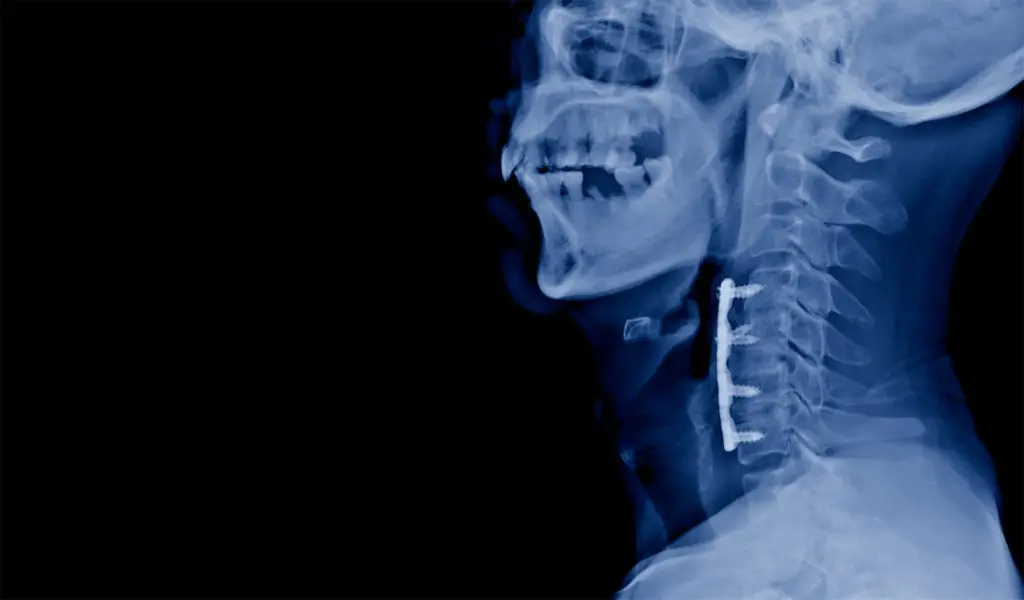
The procedure consists of two primary components: discectomy and fusion. During the discectomy phase, the surgeon removes the damaged disc that’s causing compression of the spinal cord or nerve roots. This decompression immediately relieves pressure on neural structures. The fusion component involves placing a bone graft or implant in the space where the disc was removed, followed by the application of a small plate and screws to stabilize the adjacent vertebrae. Over time, the vertebrae grow together (fuse) across this space, creating a solid bridge of bone that maintains proper spacing and prevents motion between the segments.
The anterior surgical approach for cervical spine procedures offers distinct benefits that New Jersey patients can expect:
This approach has been refined over decades of clinical usage and remains the gold standard for addressing many cervical disc pathologies due to its proven safety profile and effectiveness.
ACDF surgery addresses several cervical spine conditions that cause neck pain, arm pain, and neurological symptoms. Understanding whether your specific condition may benefit from this procedure is an important first step in your treatment journey.
Cervical disc herniation occurs when the inner material protrudes through the outer layer, compressing nerve roots or the spinal cord. This compression typically causes radiating arm pain following the pattern of the affected nerve, along with possible weakness, numbness, or tingling. ACDF effectively removes this herniated material and prevents recurrence by eliminating motion at that segment.
Cervical degenerative disc disease involves the breakdown of discs between vertebrae, leading to height loss, bone spur formation, and potential nerve compression. As discs lose height, facet joints may become overloaded, neural foramina (nerve exit points) can narrow, and overall spine alignment may be affected. ACDF restores appropriate disc height and alignment while eliminating painful motion between deteriorated segments.
ACDF is typically recommended when non-surgical approaches have been unsuccessful in providing adequate relief. Your New Jersey surgeon may recommend considering this procedure if:
Each case requires individualized assessment, taking into account the specific pathology, symptom severity, and your overall health status and goals.
Understanding what to expect during your ACDF procedure helps alleviate anxiety and prepares you for this important step in your treatment journey. While the specific details vary based on individual circumstances, the procedure typically follows a consistent approach.
On the day of surgery, you’ll undergo general anesthesia to ensure your comfort throughout the procedure. Your surgeon makes a small horizontal incision in the front of the neck, carefully navigating between vital structures like the trachea, esophagus, and carotid arteries to access the spine. Specialized retractors gently hold these structures aside while providing clear visualization of the cervical spine. The surgeon then removes the damaged disc entirely, along with any bone spurs or other compressive elements, ensuring the nerve roots and spinal cord are completely decompressed.
After confirming adequate decompression, the surgeon places an interbody spacer or bone graft into the empty disc space, restoring proper height and alignment. A small titanium plate is secured to the front of the vertebrae using screws, providing immediate stability while the biological fusion process begins. The incision is then closed with sutures that typically leave a minimal scar that often fades over time.
Recovery following ACDF surgery progresses through several phases, each with distinct milestones and considerations.
The immediate postoperative period involves a hospital stay of 1-2 days for monitoring and pain management. Most patients may begin walking the same day as surgery, with gradual increases in activity as comfort allows. A soft collar may be prescribed for the first few weeks to limit excessive motion while initial healing occurs. Many patients experience immediate improvement in arm pain following surgery, though some symptoms may take time to fully resolve as the nerves recover from previous compression.
The intermediate recovery phase spans approximately 4-6 weeks post-surgery. During this time, your activity level gradually increases while still avoiding certain movements like heavy lifting, excessive bending, or twisting of the neck. Physical therapy often begins during this phase, focusing on proper posture, gentle strengthening, and range of motion exercises within safe parameters. Most patients can return to desk work or light-duty occupations within 2-4 weeks, though jobs involving significant physical demands may require longer recovery periods.
The biological fusion process occurs gradually over 3-12 months following surgery. During this time, bone cells grow across the disc space, eventually creating a solid bridge between the vertebrae. This process provides long-term stability to the operated segments.
Follow-up appointments with imaging studies track this fusion progress, with most patients achieving solid fusion by 6-12 months post-surgery. Once fusion is complete, the hardware (plate and screws) is no longer essential for stability but typically remains in place unless causing issues. The success rate for ACDF surgery is generally high, with studies showing good to excellent outcomes in 85-95% of appropriately selected patients.
At New York Spine Specialist, we employ the latest advancements in ACDF technique and technology to optimize outcomes for our patients. These innovations have significantly improved both the surgical experience and long-term results.
Intraoperative neuromonitoring provides real-time feedback about neurological function during surgery, adding an extra layer of safety when working near delicate neural structures. Computer navigation systems enhance precision in hardware placement, particularly in complex cases or abnormal anatomy. Modern interbody devices engineered with materials that promote bone growth while providing immediate structural support have improved fusion rates and decreased complications compared to earlier techniques.
Our New Jersey specialists maintain expertise in these advancing technologies through continuous education and selective implementation of proven innovations that meaningfully improve patient outcomes. Each surgical plan is customized to the individual patient’s anatomy and condition, utilizing the most appropriate techniques and implants for their specific situation.
At New York Spine Specialist, our physicians are rated in the top 1% of doctors in NY/NJ and are affiliated with some of the most recognized hospitals, including New York Presbyterian Hospital in lower Manhattan, Hudson Regional Seacaucus, Northwell, Bayone Hospital, Carewell Health Medical Center in East Orange, NJ, and Brooklyn Hospital in Brooklyn, NY. Our multilingual staff speaks Spanish, Italian, French, Korean, Cantonese, and Mandarin, ensuring clear communication throughout your treatment journey.
We approach cervical spine surgery with meticulous attention to detail, from initial consultation through postoperative care. Our comprehensive approach integrates surgical expertise with personalized rehabilitation plans to optimize your recovery and long-term outcome. To learn more about ACDF surgery and whether it might be appropriate for your cervical spine condition, call us at (551) 550-7246 or schedule a consultation through our contact form.