
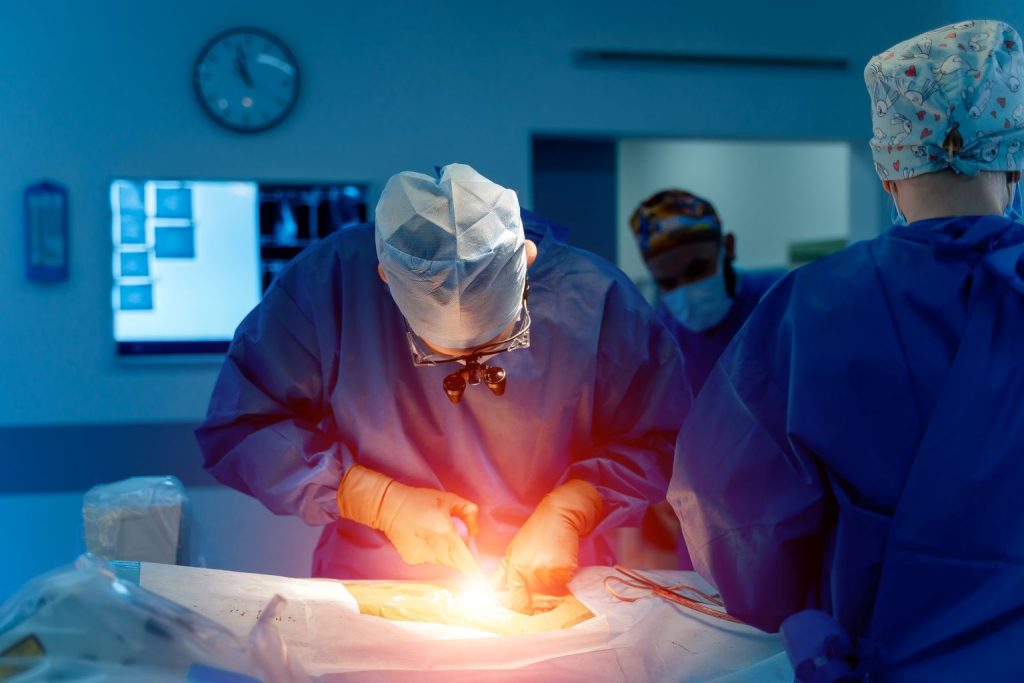
When chronic back pain disrupts your daily life, minimally invasive spine surgery offers hope for relief with significantly less trauma to your body than traditional open procedures. This advanced surgical approach uses smaller incisions, specialized instruments, and cutting-edge technology to treat spine conditions while preserving healthy tissue and reducing recovery time. For patients who have exhausted conservative treatment options, these innovative techniques provide an effective pathway to lasting pain relief.
At New York Spine Specialist, we understand how debilitating spine conditions can affect every aspect of your life. Our experienced spine surgeons utilize the latest minimally invasive techniques to help patients throughout New Jersey return to active, pain-free living with faster healing and minimal scarring.
Minimally invasive spine surgery represents a revolutionary advancement in treating spine disorders. Unlike traditional open surgery that requires large incisions and extensive muscle dissection, minimally invasive procedures use small incisions typically measuring one inch or less. Surgeons access the spine through natural muscle planes or by gently separating muscle fibers rather than cutting through them.
This approach employs specialized instruments, microscopes, and real-time imaging technology to provide surgeons with enhanced visualization while minimizing tissue damage. The precision of these techniques allows for targeted treatment of specific spine problems while preserving the surrounding healthy structures that support spinal stability.
Modern minimally invasive spine surgery incorporates state-of-the-art technology including intraoperative navigation systems, high-definition endoscopes, and fluoroscopic guidance. These tools enable surgeons to work with exceptional accuracy while maintaining complete visualization of the surgical site. Computer-assisted navigation provides real-time feedback about instrument positioning, ensuring precise placement of screws, rods, and other implants when necessary.
The result is more precise treatment with reduced risk of complications and improved long-term outcomes for patients. This technological integration allows surgeons to achieve the same therapeutic goals as traditional open surgery while dramatically reducing the physical impact on patients.
Minimally invasive spine surgery effectively addresses numerous spine conditions that cause chronic pain and disability. Herniated discs, one of the most common reasons for spine surgery, can often be treated using microscopic discectomy techniques that remove the problematic disc material while preserving healthy disc structure. These procedures target the specific portion of the disc causing nerve compression without disturbing surrounding tissues.
Spinal stenosis, characterized by narrowing of the spinal canal that compresses nerves, may be treated through minimally invasive decompression procedures. These techniques create more space for nerves without the extensive bone removal required in traditional surgery. Laminotomy and foraminotomy procedures can be performed through small incisions to relieve pressure on compressed nerve roots.
Additionally, certain types of spinal instability can be addressed using minimally invasive fusion techniques that stabilize vertebrae with smaller incisions and less muscle disruption. These procedures utilize specialized instruments to place bone grafts and stabilizing hardware through tube-like retractors that protect surrounding tissues.
Degenerative disc disease, compression fractures, and select cases of scoliosis may also benefit from minimally invasive approaches. Vertebroplasty and kyphoplasty procedures can effectively treat compression fractures by stabilizing the vertebral body through small incisions. Even complex reconstructive procedures can sometimes be performed using minimally invasive techniques in appropriate candidates.
Each patient receives a comprehensive evaluation to determine if they are a candidate for these advanced techniques based on their specific condition, anatomy, overall health, and treatment goals.
The advantages of minimally invasive spine surgery extend far beyond smaller scars. Patients typically experience significantly less post-operative pain compared to traditional open procedures because minimal muscle tissue is disrupted during surgery. This reduced tissue trauma translates to faster healing times and shorter hospital stays, with many procedures performed on an outpatient basis or requiring only an overnight stay.
Recovery periods are substantially shortened, allowing patients to return to work and daily activities sooner. Most patients can resume light activities within days rather than weeks, and full recovery often occurs in a fraction of the time required for traditional surgery. The risk of infection is lower due to smaller incisions, and blood loss during surgery is minimal, reducing the need for blood transfusions.
Patients also experience less post-operative muscle spasms and stiffness, contributing to improved comfort during the healing process. The reduced use of pain medications during recovery minimizes the risk of medication-related complications and allows for clearer thinking during the healing period.
The preservation of normal spine anatomy is another crucial benefit. By maintaining the natural muscle attachments and bone structures, minimally invasive techniques help preserve spinal stability and function. This approach may reduce the likelihood of adjacent segment problems that can sometimes occur after traditional spine surgery when normal spinal mechanics are altered.
Patients often report higher satisfaction rates with minimally invasive procedures due to the combination of effective pain relief and faster return to normal activities. The cosmetic benefits of smaller incisions also contribute to improved patient confidence during recovery.
Successful minimally invasive spine surgery begins with thorough preparation and patient education. Our team provides detailed pre-operative instructions and ensures you understand what to expect before, during, and after your procedure. We coordinate with your primary care physician and other healthcare providers to optimize your overall health before surgery.
Post-operative care includes detailed recovery guidelines, physical therapy recommendations, and regular follow-up appointments to monitor your progress. Our comprehensive approach ensures you have the support needed for optimal healing and long-term success.
Selecting the right surgical team for your spine care is crucial for achieving optimal outcomes. Our practice combines advanced surgical expertise with a patient-centered approach that prioritizes safety, effectiveness, and compassionate care.
Our surgical team consists exclusively of board-certified orthopedic and neurological surgeons who have completed additional fellowship training in spine surgery. This advanced training ensures that our surgeons have the expertise to handle even the most complex spinal conditions using minimally invasive techniques.
Dr. Lattuga and our team of spine surgeons have performed thousands of minimally invasive procedures, developing the technical skills and judgment necessary to achieve excellent outcomes. Our surgeons are rated in the top 1% of doctors in the New York/New Jersey area by Press Ganey, a nationally recognized patient survey organization.
Our surgical facilities are equipped with the latest technology for minimally invasive spine surgery. Advanced imaging systems, including intraoperative CT and fluoroscopy, provide real-time guidance during procedures. High-definition endoscopes and specialized microsurgical instruments enable precise surgical execution.
Many of our minimally invasive procedures can be performed on an outpatient basis, allowing patients to return home the same day. Our ambulatory surgery centers are accredited and staffed by experienced teams dedicated to patient safety and comfort.
We believe that successful spine surgery extends beyond the operating room. Our comprehensive approach includes thorough pre-operative evaluation, detailed surgical planning, and comprehensive post-operative care. We work closely with pain management specialists, physical therapists, and other healthcare providers to ensure optimal outcomes.
Our multilingual staff can provide care in Spanish, Italian, French, Korean, Cantonese, and Mandarin, ensuring that language barriers don’t interfere with quality care. We treat our patients like family, providing personalized attention and support throughout the treatment process.
Understanding the treatment process helps patients feel more confident and prepared for their surgical experience. From initial consultation through recovery, we provide clear communication and comprehensive support at every step.
Your journey begins with a comprehensive evaluation that includes a detailed medical history, physical examination, and review of imaging studies. Our surgeons utilize advanced diagnostic techniques, including MRI, CT scans, and sometimes specialized studies like myelography, to precisely identify the source of your symptoms.
During your consultation, we’ll discuss your symptoms, treatment goals, and previous therapies. We believe in shared decision-making and will thoroughly explain your condition and all available treatment options, including both surgical and non-surgical approaches.
Once surgery is recommended, we develop a detailed surgical plan tailored to your specific condition. Pre-operative imaging and planning ensure optimal surgical execution and outcomes. We’ll provide detailed instructions for pre-operative preparation, including any necessary medical clearances.
On the day of surgery, our experienced team will guide you through the process. Most minimally invasive procedures are performed under general anesthesia and take 1-3 hours, depending on the complexity of the case. Your family will receive regular updates during the procedure.
Recovery from minimally invasive spine surgery is typically much faster than traditional open procedures. Most patients can walk within hours of surgery and are discharged home the same day or after an overnight stay. Pain medication is usually needed for only a few days to weeks.
Follow-up appointments are scheduled at regular intervals to monitor your progress and ensure proper healing. Physical therapy may be recommended to help restore strength and mobility. Most patients can return to desk work within 1-2 weeks and more physical activities within 4-6 weeks.
If chronic spine pain is limiting your quality of life, minimally invasive spine surgery may offer the solution you have been seeking. Our team at New York Spine Specialist combines decades of experience with the most advanced surgical techniques available today. We are committed to providing personalized care that addresses your unique needs while minimizing the impact of surgery on your body.
Our comprehensive approach includes thorough evaluation, detailed treatment planning, and dedicated post-operative support to ensure optimal outcomes. We proudly serve patients throughout New Jersey with convenient locations and accept most major insurance plans. Take the first step toward a pain-free future by contacting our office at (551) 550-7246 or book an appointment online.
Recovery time varies depending on the specific procedure and individual patient factors. Most patients can walk within hours of surgery and return to light activities within a few days. Full recovery typically occurs within 4-6 weeks, which is significantly faster than traditional open surgery that may require 3-6 months of recovery.
Minimally invasive techniques can treat most common spinal conditions, including herniated discs, spinal stenosis, spondylolisthesis, degenerative disc disease, and certain spinal tumors. Our surgeons will evaluate your specific condition to determine if you’re a candidate for minimally invasive surgery.
Most insurance plans, including Medicare and Medicaid, cover medically necessary minimally invasive spine surgery. Our insurance verification team will work with your insurance provider to determine coverage and help you understand any out-of-pocket costs before your procedure.
While all surgical procedures carry some risk, minimally invasive spine surgery has significantly lower complication rates than traditional open surgery. Risks include infection, bleeding, nerve injury, and the potential need for additional surgery. Your surgeon will discuss specific risks based on your condition and procedure.
Candidacy for minimally invasive surgery depends on your specific condition, anatomy, and overall health. Most patients with common spinal conditions are candidates for minimally invasive approaches. A comprehensive evaluation by our spine surgeons will determine the best treatment approach for your situation.