
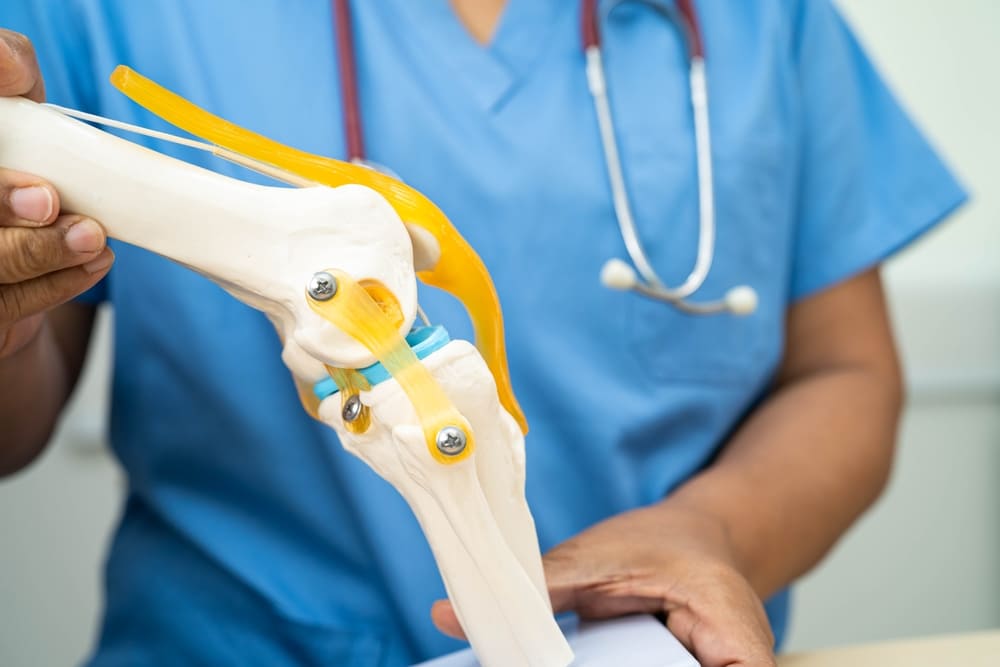
Does chronic knee pain keep you from climbing stairs, sleeping through the night, or simply enjoying a walk? You may want to review the possible signs that you need knee replacement surgery.
Knee pain is not the only issue that may benefit from surgery. If you would like to discuss solutions for back and neck pain, our spine specialist in New York can help. For now, this guide covers when to consider a knee joint replacement with an orthopedic surgeon.
Knee Arthritis Progression and Surgical Options
The CDC’s National Center for Health Statistics reports that the rate of total knee replacement among adults aged 45 and over nearly doubled between 2000 and 2010, rising by 86% in men and 99% in women. Many people who opt for a knee replacement have some form of arthritis, but this is not the only cause of cartilage loss in this joint.
Common signs and symptoms that point toward surgery include pain, stiffness, and a steady loss of motion that conservative care cannot always reverse. Repetitive motion can also wear away cartilage, causing bone to rub against bone. Early on, patients may respond well to nonsurgical options, but these measures cannot regrow cartilage, and underlying conditions tend to worsen without knee replacement surgery.
What Are the Top Signs You May Need Knee Replacement Surgery?
According to the American Academy of Orthopaedic Surgeons, the U.S. now performs approximately 700,000 total knee replacements each year. Since over 90% of those replacement knees are still functioning well 15 years after surgery, this option may be worth considering.
The following may indicate the need for knee replacement surgery:
- Pain that lingers for months despite medication, physical therapy, and injections
- Pain that wakes you at night or is present while resting
- Swelling that returns no matter what
- Visible knee deformity, such as the knee bowing outward
- Trouble fully straightening or bending the leg
- A noticeable decline in your ability to walk, work, or care for yourself
Severe knee pain symptoms requiring surgical evaluation top this list, though the decision is influenced by how much the discomfort affects your quality of life.
Mobility Loss and Indicators for Knee Replacement Surgery
Arthritis is a major driver of surgical demand in the United States. According to a study in the Journal of Bone and Joint Surgery, the primary total knee replacements performed annually in the United States doubled over the previous decade, exceeding 620,000 procedures in 2009.
Stiffness that is worse in the morning or after sitting is a red flag, especially since this can increase the risk of a fall. However, even if arthritis is not the case, pain is a common reason patients pursue a surgical evaluation. If it reaches the point where walking a city block, standing on the subway, or shopping in your neighborhood feels impossible, your joint may be signaling that it needs attention.
If you notice that you cannot fully straighten your leg, struggle to climb stairs, or rely on a cane or railing more than you used to, delaying treatment may not be advisable.
Move Forward With New York Spine Specialist
The pain from certain common sports-related knee injuries may feel similar to what you might experience with sports injuries or car accidents that affect the back or neck. Call New York Spine Specialist at (516) 355-0111 today to learn about our spine-related treatments and surgical options.
Our doctors accept most insurance plans, including workers’ compensation, no-fault, and PIP (personal injury protection). Same-day appointments may be available.
Frequently Asked Questions
If you are experiencing knee-related issues, review these common questions about available procedures.
What Is the Average Age for Knee Replacement Surgery?
The American Academy of Orthopaedic Surgeons notes that the average age for knee replacement surgery is between 50 and 80 years old. However, patients of any age may be candidates based on pain severity and joint damage.
Can You Delay Knee Replacement Surgery Too Long?
Yes. You can delay knee replacement surgery too long. For example, waiting until arthritis is severe may lead to permanent loss of motion, muscle weakness, and joint deformity that can persist even after joint replacement.
What Are the Alternatives to Knee Replacement Surgery?
Some alternatives to try before knee replacement surgery may include physical therapy, weight management, anti-inflammatory medications, hyaluronic acid injections, or bracing. A specialist can advise you on the best options based on the signs and symptoms you are exhibiting, so you know when to consider knee joint replacement treatments.