
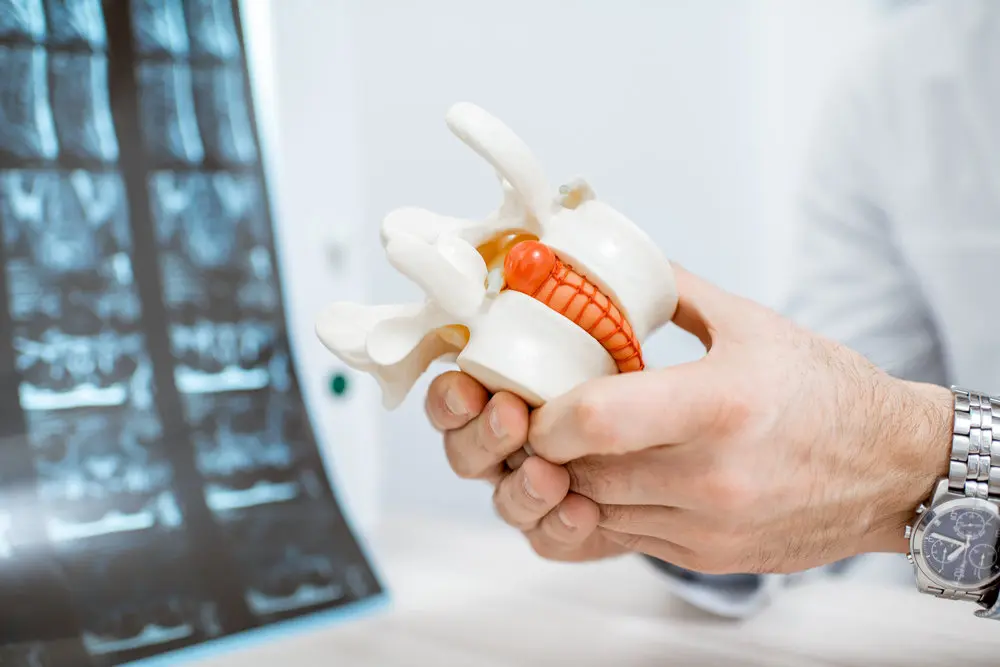
Spine-related pain can be confusing and overwhelming, especially when medical terminology like “herniated disc” and “bulging disc” gets thrown around during consultations and diagnostic discussions. While these terms are often used interchangeably in casual conversation, they actually describe distinctly different conditions that require different treatment approaches and have varying implications for your long-term spinal health.
At New York Spine Specialist, we believe that understanding your condition empowers you to make informed decisions about your treatment and recovery. By learning the key differences between herniated and bulging discs, you can better communicate with your healthcare team and develop realistic expectations about your healing timeline and treatment options.
What Are Spinal Discs and How Do They Function?
Spinal discs act as cushions between the vertebrae in your spine, functioning like shock absorbers that allow for smooth movement while protecting the bony structures from wear and damage. Each disc consists of two main components: a tough outer ring called the annulus fibrosus and a gel-like inner core known as the nucleus pulposus, which provides the disc’s cushioning properties.
Healthy discs maintain proper spacing between vertebrae, allow for normal spinal flexibility, and help distribute loads evenly across the spine during daily activities. As we age or experience injury, these discs can begin to deteriorate, leading to various forms of disc problems that may cause pain, stiffness, and neurological symptoms depending on their severity and location.
Understanding Bulging Discs
A bulging disc occurs when the outer wall of the disc weakens and allows the entire disc to extend beyond its normal boundaries, similar to how a balloon might bulge when overinflated. This condition typically develops gradually over time as the disc material loses height and the outer wall becomes less resilient, causing the disc to spread outward under the pressure of body weight and movement.
Most bulging discs remain contained within the outer disc wall and may not cause symptoms initially, particularly if they don’t compress nearby nerve structures. However, as the bulge progresses, it can begin to narrow the spinal canal or neural foramen, potentially leading to pain, numbness, or weakness in the back and legs depending on which nerves become affected.
Understanding Herniated Discs
A herniated disc represents a more severe condition where the outer wall of the disc actually ruptures or tears, allowing the inner gel-like material to escape and potentially compress nerve roots or the spinal cord. This condition can occur suddenly due to trauma or develop gradually when a bulging disc progresses to the point where the outer wall can no longer contain the inner material.
Herniated discs often cause more immediate and severe symptoms than bulging discs because the escaped disc material can directly irritate or compress nerve structures. The inflammatory substances within the nucleus pulposus can also cause chemical irritation of nearby nerves, leading to pain that may be disproportionate to the size of the herniation and can persist even when direct compression is minimal.
Key Differences in Symptoms
Bulging discs may produce subtle symptoms that develop gradually over time, including mild to moderate back pain, occasional stiffness, and intermittent discomfort that worsens with certain activities or prolonged sitting. Many people with bulging discs experience symptoms that come and go, often correlating with activity levels, stress, or changes in weather.
Herniated discs typically cause more acute and severe symptoms, including sharp or shooting pain that may radiate into the arms or legs, numbness or tingling in specific nerve distribution patterns, and sometimes muscle weakness in affected areas. The pain from a herniated disc often has a more sudden onset and can be debilitating, making it difficult to perform normal daily activities.
Diagnostic Approaches
Both conditions can be diagnosed through similar imaging studies, but the appearance and implications differ significantly. MRI scans provide the most detailed view of disc conditions, clearly showing the extent of bulging or the location and size of disc herniations, while also revealing any nerve compression or inflammation in surrounding tissues.
Your physician will correlate imaging findings with your specific symptoms and physical examination results to determine the clinical significance of disc abnormalities. It’s important to note that many people have bulging or even herniated discs visible on imaging studies without experiencing any symptoms, which is why clinical correlation remains essential for proper diagnosis and treatment planning.
Treatment Differences
Bulging discs often respond well to conservative treatments including physical therapy, anti-inflammatory medications, and activity modification. The gradual nature of bulging disc development means that conservative approaches have time to be effective, and many patients experience significant improvement without requiring invasive interventions.
Herniated discs may require more aggressive treatment approaches, particularly when nerve compression causes significant pain or neurological symptoms. While conservative treatment is still the first line of therapy, herniated discs are more likely to require interventional procedures such as epidural steroid injections or surgical intervention when conservative measures fail to provide adequate relief.
Expert Care for All Disc Conditions
Whether you’re dealing with a bulging disc or herniated disc, proper diagnosis and treatment planning are essential for achieving optimal outcomes and preventing progression. At New York Spine Specialist, our comprehensive diagnostic approach helps differentiate between these conditions and develop targeted treatment plans that address your specific needs. Dr. Lattuga, rated in the top 1% of doctors in New York and New Jersey by Press Ganey, leads our team in providing advanced care for all types of disc conditions using both conservative and surgical approaches when appropriate.
Our state-of-the-art imaging capabilities and multidisciplinary treatment team ensure that you receive accurate diagnosis and effective treatment regardless of which type of disc condition you’re experiencing. If you’re experiencing back pain and want to understand whether you might be dealing with a bulging or herniated disc, contact us today at (516) 355-0111 or schedule your consultation through our contact form to receive expert evaluation and personalized treatment recommendations.