
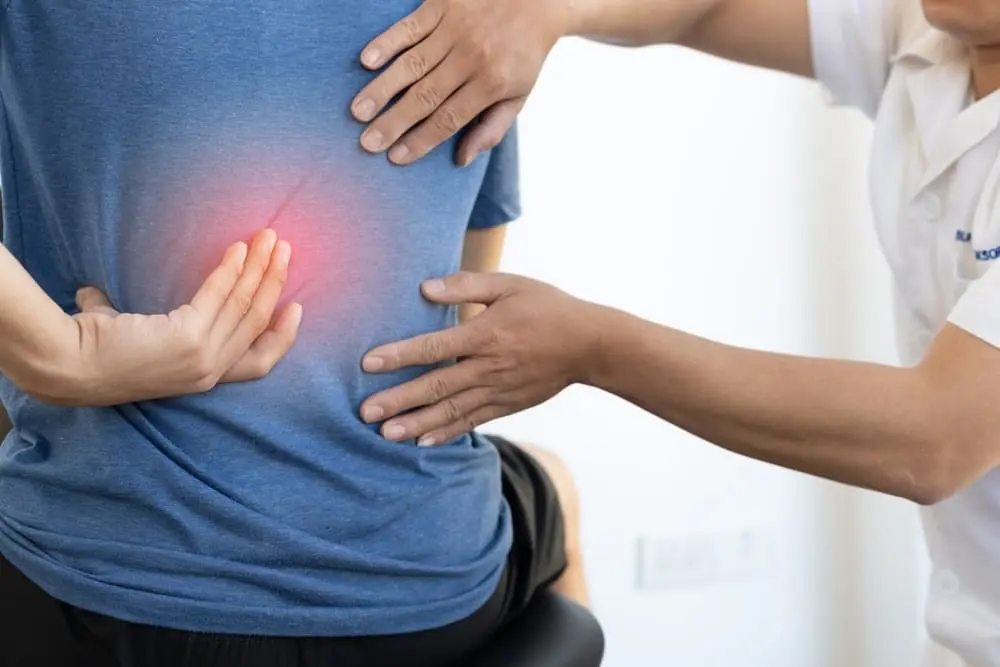
Living with acute or chronic pain can affect your ability to work, sleep, exercise, and participate in everyday activities. At New York and New Jersey Spine and Orthopedics, our Interventional Pain Management specialists provide comprehensive nonsurgical care for patients experiencing spine pain, joint pain, nerve pain, headaches, musculoskeletal conditions, and other complex pain disorders.
Our approach goes beyond temporarily addressing symptoms. We work to identify the underlying source of pain and develop an individualized treatment plan designed to reduce symptoms, improve mobility and function, and help patients return to the activities they enjoy.
Treatment may combine physical therapies, medication management, behavioral approaches, and advanced interventional procedures based on each patient’s diagnosis, symptoms, and goals.
Pain can originate from many different structures, including the spine, joints, muscles, and nerves. Determining the source of symptoms is an important first step in developing an effective treatment plan.
Our pain management physicians perform detailed evaluations to understand each patient’s symptoms, medical history, previous treatments, physical limitations, and individual goals.
Our approach to pain management includes:

Dr. Daniel P. Giangrasso is a Physical Medicine and Rehabilitation physician with subspecialty fellowship training in Interventional Pain Management.
After graduating from the New York College of Osteopathic Medicine, Dr. Giangrasso completed his internship at South Nassau Communities Hospital and his residency in Physical Medicine and Rehabilitation at the Rusk Institute at New York University Medical Center. He then completed additional fellowship training in interventional pain management at Hudson Medical.
Dr. Giangrasso treats a broad range of acute and chronic pain conditions, including lower back pain, neck pain, joint pain, headaches, diabetic nerve pain, neuropathic pain, musculoskeletal pain, and complex regional pain syndrome (CRPS).
His approach combines appropriate physical therapies, medications, behavioral strategies, and interventional procedures to create an individualized treatment plan.
Dr. Giangrasso performs procedures including:
He also evaluates and treats pain related to sports injuries, accidents, spinal conditions, musculoskeletal disorders, and everyday activities.
Dr. Giangrasso places particular emphasis on educating patients about their condition and involving them in their own care, with the goal of reducing pain while improving mobility, function, and quality of life.

Dr. Denis Cherkalin is a Board-Certified Interventional Pain Management physician specializing in the diagnosis and nonsurgical management of painful conditions.
Originally from Brooklyn, New York, Dr. Cherkalin received his medical degree from the State University of New York Downstate Medical Center College of Medicine and completed his interventional pain management training at Montefiore Medical Center.
As an anesthesiologist specializing in pain management, Dr. Cherkalin focuses on accurately diagnosing the source of pain and developing individualized treatment strategies using nonsurgical therapies and interventional procedures.
He treats patients experiencing pain associated with spinal conditions, musculoskeletal problems, sports injuries, accidents, and everyday activities.
His approach begins with a thorough evaluation of each patient’s symptoms and condition, followed by a treatment plan focused on helping patients manage pain, improve function, and return to the activities that matter to them.
Our Interventional Pain Management specialists diagnose and treat a wide range of acute and chronic pain conditions involving the spine, joints, muscles, and nervous system.
Neck and back pain may develop because of injury, degenerative changes, disc problems, arthritis, nerve compression, or other conditions involving the spine.
Our physicians evaluate and manage conditions and symptoms including:
Treatment depends on the underlying diagnosis and may include conservative management as well as interventional spine procedures when appropriate.
Pain caused by an irritated or compressed spinal nerve may travel from the spine into an arm or leg.
Our pain management specialists evaluate patients experiencing:
For selected patients, procedures such as epidural injections or other targeted interventions may be considered as part of a comprehensive treatment plan.
Pain does not always originate from the spine. Muscles, joints, tendons, and other soft tissues can also become painful because of injury, repetitive activity, degeneration, or other musculoskeletal conditions.
Our physicians evaluate and treat:
Depending on the diagnosis, treatment may include physical therapies, medication management, trigger point injections, peripheral joint injections, or other nonsurgical approaches.
Neuropathic pain develops when nerves are damaged, irritated, or functioning abnormally. It can feel different from typical muscle or joint pain and may be described as burning, shooting, electrical, tingling, or hypersensitive.
Our physicians manage nerve-related pain conditions including:
Treatment is individualized based on the suspected cause of the nerve pain, its severity, and its effect on function and quality of life.
Complex Regional Pain Syndrome, or CRPS, is a chronic pain condition that can develop following an injury or other physical trauma.
Symptoms can be disproportionate to the original injury and may include persistent pain, sensitivity, swelling, changes in skin temperature or appearance, and difficulty moving the affected area.
Because CRPS can be complex to diagnose and manage, treatment may involve a combination of medication, physical rehabilitation, behavioral strategies, nerve blocks, or other interventional approaches.
For selected patients with persistent pain that has not adequately responded to more conservative treatments, advanced therapies such as spinal cord stimulation may also be evaluated.
Certain types of headaches and head or neck-related pain may benefit from evaluation by a pain management physician.
Depending on the diagnosis, treatment may incorporate medications, rehabilitation strategies, nerve-related procedures, or botulinum toxin chemodenervation when medically appropriate.
Interventional pain management uses targeted procedures to diagnose and treat specific sources of pain.
The appropriate procedure depends on the patient’s diagnosis, symptoms, medical history, previous treatments, and response to conservative care.
Procedures offered by our specialists may include:
Epidural injections deliver medication to the area around irritated or compressed spinal nerves.
They may be considered for selected patients experiencing symptoms associated with conditions such as:
The goal is to reduce inflammation and pain so patients can improve mobility and participate more comfortably in rehabilitation and everyday activities.
Nerve blocks use targeted injections around specific nerves or groups of nerves.
Depending on the patient’s condition, a nerve block may be used diagnostically to help identify a source of pain or therapeutically as part of a pain management plan.
Nerve blocks may be considered for certain spine-related, musculoskeletal, neuropathic, or regional pain conditions.
Rhizotomy is an interventional procedure designed to interrupt selected pain signals traveling through specific nerves.
It may be considered for certain patients with chronic spine-related pain when diagnostic evaluation indicates that particular nerves or spinal joints are contributing to symptoms.
The decision to perform a rhizotomy is based on a thorough evaluation and the patient’s response to appropriate diagnostic procedures.
Trigger points are sensitive areas within muscles that can cause localized pain and may also produce referred pain in another area of the body.
Trigger point injections may be considered for selected patients with persistent muscle pain, spasms, or painful trigger points.
They are often incorporated into a broader treatment plan that may also include rehabilitation, stretching, exercise, or other nonsurgical therapies.
Joint pain can result from injury, inflammation, arthritis, overuse, or other musculoskeletal conditions.
Peripheral joint injections may be used as part of the nonsurgical management of selected painful joint conditions.
Before recommending an injection, our physicians evaluate the affected joint and the likely source of symptoms to determine whether an injection is appropriate.
Botulinum toxin may be used for selected conditions in which abnormal muscle activity or certain pain disorders contribute to symptoms.
The decision to use botulinum toxin depends on the patient’s diagnosis and specific clinical circumstances.
For certain patients with persistent chronic pain that has not responded adequately to more conservative treatments, spinal cord stimulation may be considered.
Spinal cord stimulation uses mild electrical impulses to modify pain signals before they reach the brain.
It may be evaluated for selected patients with chronic neuropathic pain, complex regional pain syndrome, or other difficult-to-manage pain conditions.
Patients are carefully evaluated before spinal cord stimulation is recommended. In appropriate cases, a temporary trial may be performed first to assess whether the therapy provides meaningful improvement before permanent implantation is considered.
Pain management is not limited to injections or procedures.
Depending on the patient’s condition, our pain management team may incorporate multiple treatment strategies, including:
This multifaceted approach recognizes that chronic pain can involve physical, neurological, functional, and behavioral factors.
The goal is to develop a treatment strategy that addresses the individual patient’s condition while helping improve mobility and everyday function.
Pain following a sports injury, workplace accident, or motor vehicle accident can involve the spine, joints, muscles, nerves, or multiple structures at the same time.
Our pain management physicians evaluate and treat patients experiencing pain associated with:
Treatment is based on the patient’s diagnosis rather than simply the mechanism of injury.
The goal is to identify the structures responsible for the patient’s symptoms and develop an appropriate plan for pain management, rehabilitation, and functional recovery.
Consider scheduling an evaluation with a pain management physician when pain is persistent, recurrent, difficult to manage, or interfering with your ability to perform normal activities.
An evaluation may be appropriate if you experience:
A comprehensive evaluation can help determine the source of your symptoms and whether an interventional procedure or another form of treatment is appropriate.
One of the advantages of receiving pain management care at New York and New Jersey Spine and Orthopedics is access to a multidisciplinary team.
Many painful spine and orthopedic conditions do not immediately require surgery. Our pain management physicians can provide nonsurgical treatment while coordinating with other specialists when appropriate.
Depending on the patient’s needs, care may involve specialists in:
For patients who can be managed nonsurgically, treatment can remain focused on conservative and interventional approaches.
If symptoms progress or a structural condition requires surgical evaluation, our pain management physicians can coordinate care with the appropriate spine or orthopedic specialist.
At New York and New Jersey Spine and Orthopedics, our approach combines careful diagnosis, nonsurgical treatment, interventional procedures, and multidisciplinary specialty care.
Our pain management services include:
Our goal is to help patients better manage pain while improving mobility, function, and quality of life.
If acute or chronic pain is interfering with your ability to work, sleep, exercise, or enjoy everyday activities, schedule an evaluation with an Interventional Pain Management specialist at New York and New Jersey Spine and Orthopedics.
Our physicians provide individualized nonsurgical care for patients with neck and back pain, joint pain, sciatica, radiculopathy, headaches, neuropathic pain, complex regional pain syndrome, sports injuries, accident-related pain, and other painful conditions.
With locations throughout New York and New Jersey, our multidisciplinary team offers treatment ranging from conservative pain management to targeted injections, nerve procedures, and advanced therapies such as spinal cord stimulation.
Call today to schedule an appointment:
New York: (516) 355-0111
New Jersey: (551) 550-PAIN