
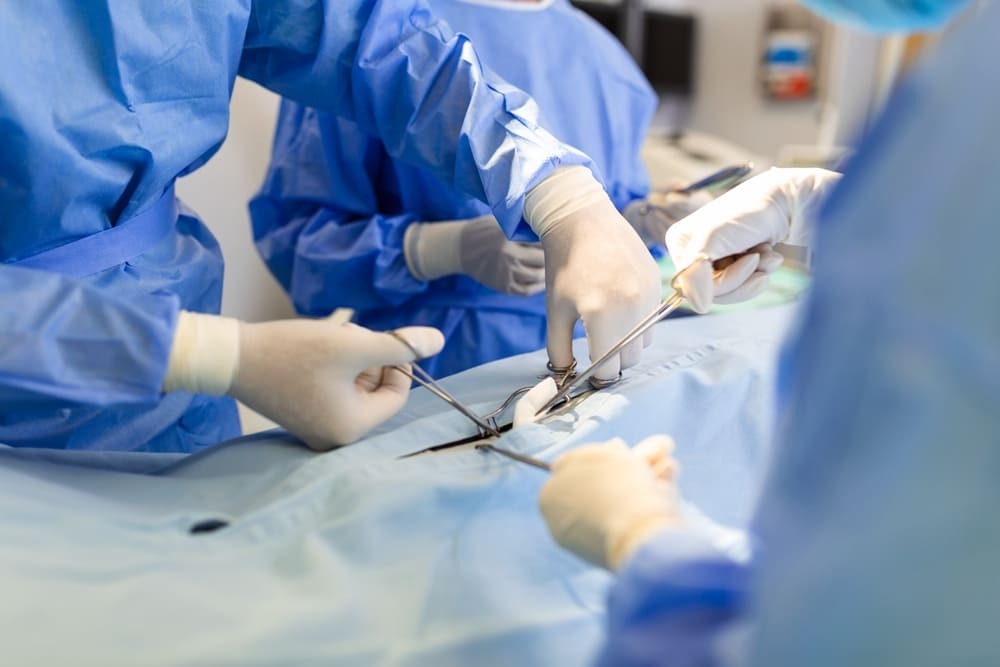
Neck pain, back pain, spinal injuries, and degenerative spine conditions can affect nearly every part of daily life – from walking and working to sleeping, exercising, and spending time with family. At New York and New Jersey Spine and Orthopedics, our spine specialists provide comprehensive care for common and complex conditions affecting the cervical, thoracic, and lumbar spine.
Our approach begins with understanding the cause of your symptoms and developing an individualized treatment plan. When surgery is appropriate, our spine surgeons offer advanced surgical options designed to address nerve compression, spinal instability, damaged discs, deformity, and other structural problems of the spine.
Every spine condition-and every patient-is different. Our physicians evaluate your symptoms, medical history, imaging, functional limitations, and personal goals before recommending treatment.
Whenever appropriate, nonsurgical treatment may be considered before surgery. For patients whose symptoms persist despite conservative treatment, or whose condition requires surgical intervention, our spine surgeons offer a range of procedures from minimally invasive decompression and disc surgery to spinal fusion and complex reconstructive surgery.
Our approach to spine care includes:
Spine surgery may be considered when a structural problem involving the vertebrae, discs, spinal cord, or nerves causes persistent pain, neurological symptoms, instability, or functional limitations.
The type of surgery recommended depends on several factors, including the location and severity of the condition, the structures involved, neurological symptoms, previous treatments, and the patient’s overall health.
Our spine surgeons treat conditions ranging from herniated discs and spinal stenosis to spinal instability, degenerative conditions, deformities, and complex spinal disorders.
Dr. Tripathi is the Clinical Instructor of Orthopaedic Surgery at Weill Cornell Medical Center…
Dr. Shah is a Johns Hopkins graduate of the Rowan University School of Osteopathic Medicine…
Dr. Markowitz is a fellowship-trained spine surgeon specializing in minimally invasive and …
Our spine specialists evaluate and treat a wide range of conditions affecting the neck, back, spinal cord, and spinal nerves.
The discs between the vertebrae provide cushioning and help the spine move. Injury, degeneration, or age-related changes can cause a disc to become damaged, bulge, or herniate. When disc material irritates or compresses nearby nerves, patients may experience neck or back pain as well as symptoms extending into the arms or legs.
Conditions we treat include:
Depending on the condition, treatment may range from conservative care to decompression, discectomy, or spinal fusion.
Spinal stenosis occurs when spaces within or around the spinal canal become narrowed. This narrowing can place pressure on the spinal cord or nerve roots and may lead to pain, numbness, tingling, weakness, or difficulty walking.
Our team evaluates and treats:
When symptoms are caused by significant compression, surgery may be considered to create additional space for the affected nerves or spinal cord.
Changes in the discs, joints, ligaments, and vertebrae can affect the stability and alignment of the spine. These problems may develop gradually with degeneration or occur following an injury.
Conditions treated include:
For some patients, stabilization or fusion surgery may be recommended when abnormal movement or instability contributes to pain or neurological symptoms.
Certain spinal conditions involve changes in alignment, curvature, or structural integrity that may require specialized evaluation and treatment.
Our spine specialists provide care for conditions including:
Treatment recommendations depend on the severity of the deformity or structural problem, neurological symptoms, functional limitations, and individual patient needs.
Our surgeons perform a range of cervical and lumbar spine procedures. The appropriate surgical technique is selected according to the patient’s diagnosis, anatomy, symptoms, and treatment goals.
Surgery of the cervical spine may be recommended when a condition in the neck causes spinal cord or nerve compression, persistent pain, weakness, numbness, or other neurological symptoms.
Procedures may include:
Lumbar spine surgery addresses conditions affecting the lower back and nerves that travel into the hips and legs. Depending on the condition, surgery may focus on removing pressure from nerves, treating a damaged disc, restoring stability, or a combination of these goals.
Procedures may include:
Spinal fusion joins two or more vertebrae to create greater stability in a selected portion of the spine.
Fusion may be considered for certain patients with spinal instability, degenerative disc disease, deformity, or other structural conditions. The specific approach depends on the location of the problem, anatomy, diagnosis, and individual surgical needs.
Our surgeons perform several types of spinal fusion, including cervical and lumbar fusion procedures.
When appropriate for the patient’s condition, minimally invasive spine surgery may provide an alternative to a traditional open surgical approach.
These procedures use specialized techniques and smaller surgical corridors to reach the affected area of the spine while minimizing disruption to surrounding tissues.
Minimally invasive techniques may be considered for selected cases involving:
Not every spinal condition can or should be treated with a minimally invasive approach. Your spine surgeon will determine the surgical technique most appropriate for your diagnosis and individual circumstances.
Some patients continue to experience symptoms or develop new problems after a previous spine operation. In these situations, a detailed evaluation can help determine whether additional treatment or revision spine surgery should be considered.
Revision surgery may be evaluated for patients experiencing persistent or recurrent pain, continued nerve compression, spinal instability, adjacent spinal problems, or other complications following previous surgery.
Because every previous operation changes the anatomy of the spine, revision surgery requires careful review of the patient’s medical history, prior procedures, current imaging, symptoms, and overall spinal alignment.
Having neck or back pain does not automatically mean you need surgery. Many spine conditions can initially be treated using nonsurgical approaches.
Surgical evaluation may become appropriate when symptoms are severe, persistent, progressive, or have not adequately responded to conservative treatment.
You may benefit from an evaluation with a spine surgeon if you experience:
A comprehensive evaluation can help determine the source of your symptoms and whether nonsurgical care or surgery is the appropriate next step.
Our goal is not simply to perform surgery-it is to identify an appropriate treatment strategy for each patient.
Depending on your diagnosis, symptoms, and previous treatment, your care plan may include nonsurgical management, interventional pain management, physical medicine and rehabilitation, or surgical treatment.
When surgery is recommended, your surgeon will discuss the proposed procedure, why it is being considered, available alternatives, potential risks and benefits, expected recovery, and realistic treatment goals.
This multidisciplinary approach allows patients to receive coordinated spine care based on their individual needs.
Your visit begins with a detailed evaluation of your symptoms, medical history, previous treatment, and how your condition affects your daily life.
Your physician may review existing imaging studies or recommend additional diagnostic testing when appropriate. The goal is to determine which structures are contributing to your symptoms and develop an individualized treatment plan.
If surgery is recommended, our team will explain the procedure and help you understand what to expect before surgery, on the day of your procedure, and throughout recovery.
At New York and New Jersey Spine and Orthopedics, patients have access to a multidisciplinary team experienced in the management of common and complex spinal conditions.
Our approach combines:
By bringing multiple areas of spine care together, we can develop treatment plans based on each patient’s diagnosis, symptoms, function, and goals.
If neck pain, back pain, numbness, weakness, sciatica, or another spinal condition is interfering with your mobility or quality of life, schedule an evaluation with the team at New York and New Jersey Spine and Orthopedics.
Our specialists provide comprehensive care for patients with herniated discs, spinal stenosis, degenerative disc disease, radiculopathy, myelopathy, scoliosis, spinal instability, fractures, and other common and complex spine conditions.
With locations throughout New York and New Jersey, our team provides access to nonsurgical spine care, minimally invasive procedures, advanced spine surgery, spinal fusion, and complex and revision spine surgery.
Call today to schedule an appointment:
New York: (516) 355-0111
New Jersey: (551) 550-PAIN